→ EQI Program | Raise your Emotional Resilience
[Click on the audio above to listen to how you can gain transformational insights through the Emotional Intelligence Experience]
This is for your leaders:
Navigating the shift from individual contributor to people leader and realizing that technical expertise no longer guarantees influence.
Managing high-performing but emotionally complex teams where tension, miscommunication, or disengagement quietly erode results.
Making decisions under pressure and wanting to reduce unintended relational fallout while still driving performance.
Responsible for culture, retention, and trust, but lacking a shared language for feedback, accountability, and emotional regulation.
Leading through change and needing to build alignment without burnout, resentment, or confusion.
Designed for:
Founders/entrepreneurs who are running a small business or nonprofit organization, and starting to build a team
First-time managers building foundational leadership skills
Middle managers leading through complexity and scale
Senior leaders shaping culture and influence across the organization
Leadership cohorts or high-potential programs
Team Building to increase trust, communication, and effectiveness
Organizational Outcomes of the EQ-i 2.0 Assessment
Bringing the EQ-i 2.0 into your organization supports:
Improved manager effectiveness and readiness
Stronger cross-functional collaboration
Reduced team conflict and interpersonal friction
Increased employee engagement and retention
More confident, accountable decision-making
A shared leadership language across levels
Why Emotional Intelligence Matters at the Leadership Level
Research shows that leaders with higher emotional intelligence (EQ), including self-awareness, self-expression, stress management, interpersonal skills, and decision-making, can have a greater impact on business outcomes.
Leaders with higher emotional intelligence correlate with stronger team engagement, more effective decision-making, and healthier workplace relationships. Leaders with elevated EQ demonstrate:
Greater self-awareness under stress
Clearer, more constructive communication
Stronger conflict navigation skills
Measured decision-making in emotionally charged situations
Increased trust and psychological safety within teams
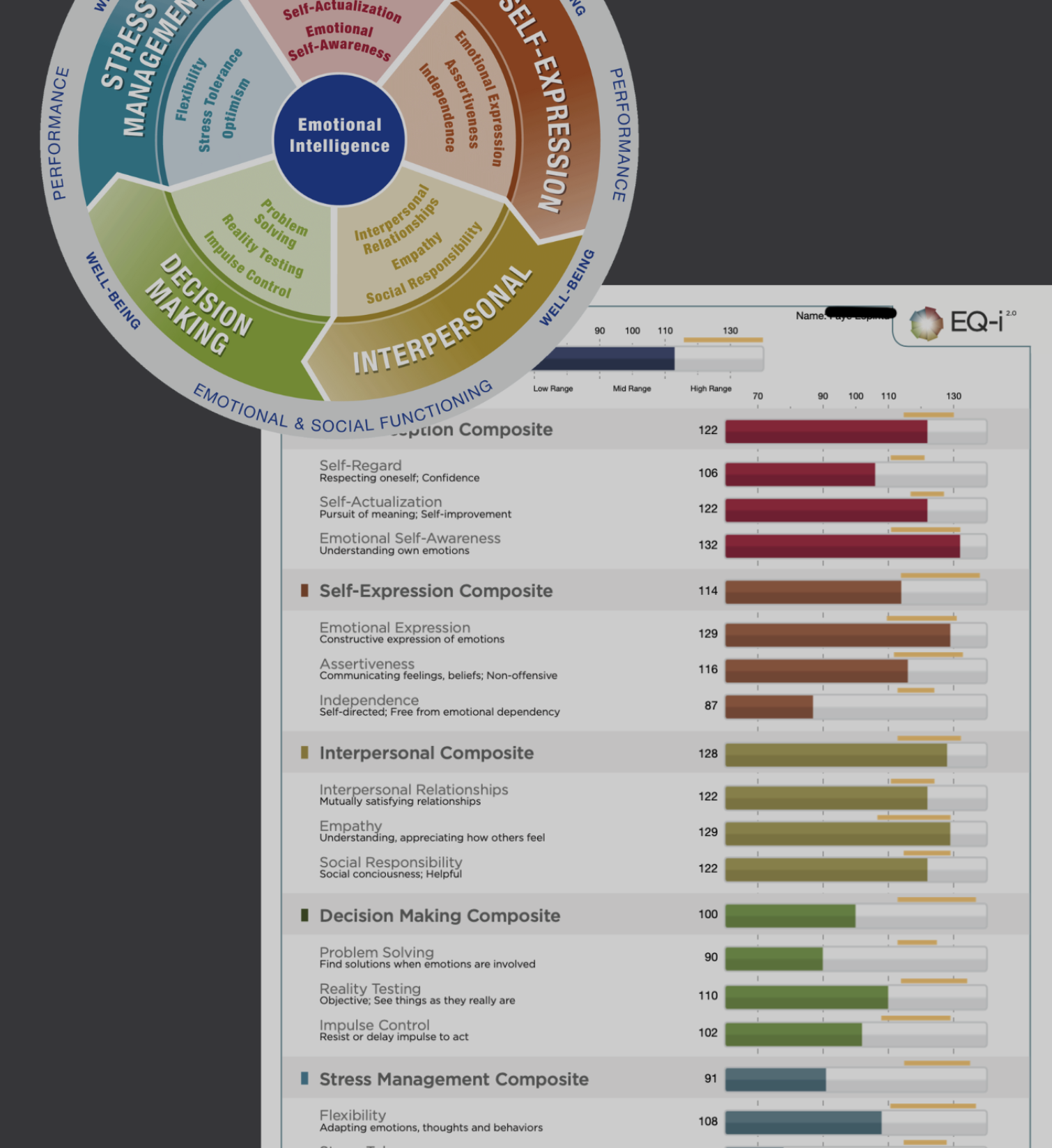
Unlike IQ or personality assessments, EQ-i encourages development and growth and can improve over time. The EQ-i assessment measures your EQ in your current stage and helps determine which composites you’ve mastered and which you can develop.

What Leaders and Organizations Receive…
EQ-i 2.0 Leadership Assessment
A scientifically validated emotional intelligence assessment completed online in approximately 15–20 minutes, measuring critical leadership competencies including self-awareness, stress tolerance, impulse control, empathy, decision-making, and interpersonal effectiveness.
60-Minute Executive Debrief (1:1)
A confidential, data-driven feedback session with Dr. Payal Beri focused on:
Interpreting results in the context of your leadership role
Identifying behavioral patterns that impact team dynamics
Strengthening decision-making under pressure
Reducing reactive leadership tendencies
Clarifying practical next steps for measurable improvement
Leaders leave with clear insight into how they show up and where targeted development will create the greatest impact.
Customized Leadership Development Plan
A structured action plan aligned to organizational goals, including:
Priority development areas
Behavior-based leadership shifts
Communication and influence strategies
Stress and conflict management practices
Accountability checkpoints for sustained growth
Designed for immediate application within real team scenarios.
Optional: Team or Cohort Engagement
Half-day or full-day facilitated workshop
Group EQ report and leadership profile insights
Alignment exercises to strengthen trust and collaboration
Shared language for feedback and accountability
This option is ideal for leadership cohorts, management teams, or high-potential programs seeking a scalable culture shift.